The clearest evidence for physical AI appears where software touches material.
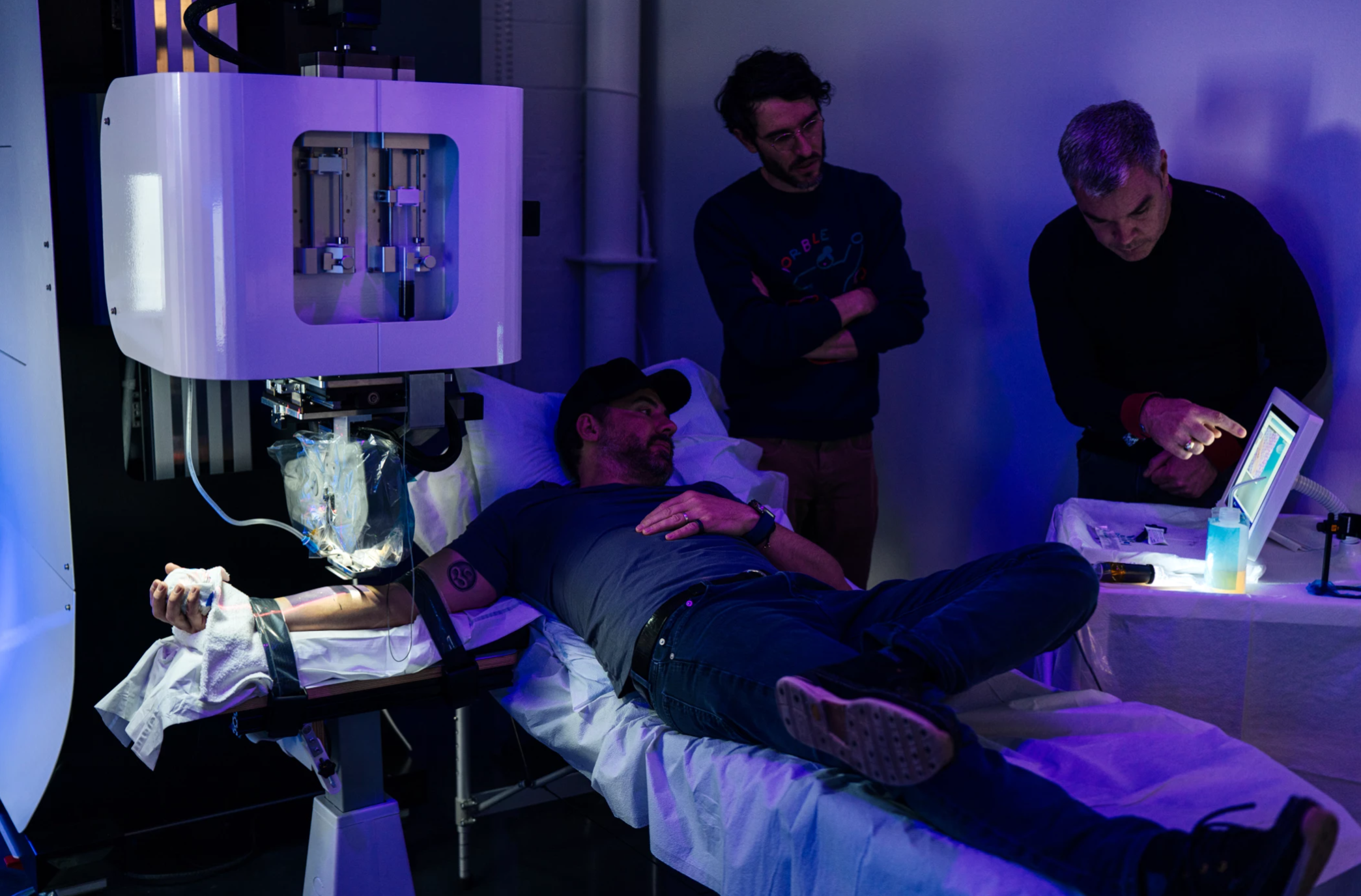
CHEF ROBOTICS builds AI-enabled systems for food assembly. Its robots work with ingredients that vary in shape, texture, adhesion, moisture, and placement. BLACKDOT operates a robotic tattoo platform, translating artwork into controlled punctures on a living, moving surface.
The domains feel far apart. Their engineering logic shares a foundation.
Both systems must turn intent into precise physical action. Both depend on perception, calibration, force, trajectory, process knowledge, and verification. Both operate around materials whose behavior cannot be captured completely by a clean CAD model. Success comes from controlling the interaction among machine, tool, material, environment, and workflow.
CHEF ROBOTICS shows how adaptation can unlock automation inside an industry long considered difficult for conventional robots. Food is deformable and inconsistent. The system uses AI and computer vision to respond to variability in real time. The company reports deployment across production environments and positions its data from real food manipulation as a compounding asset.
BLACKDOT brings the same principle to a more intimate task. Tattooing requires alignment between digital art, skin geometry, placement, needle behavior, and human tolerance. The service, tooling, software, and physical process have been designed as one robotic system.
These examples matter for product manufacturers because they move the conversation from general intelligence to interaction design. A capable model still needs an actionable world. Ingredients must be presented. Tools must be held. surfaces must be perceived. States must be confirmed. Safety must be encoded.
The opportunity is larger than making existing products barely usable by a robot. Products can be redesigned to increase reliability, throughput, quality, and data capture. Packaging can present materials more consistently. Tools can expose better grasps. Interfaces can share state. Consumables can carry machine-readable identity. Training data can cover the variants that matter.
Physical AI becomes valuable when it performs useful work. Useful work begins at the contact point.
Hero image: editorial photograph. Official brand imagery and required credits are available via the sources above.
Ainsof independently analyzes how advances in robotics affect products, tools, and physical environments. Company names and trademarks belong to their respective owners. References to third-party products do not imply endorsement or partnership.