For years, the smart home had ears and a voice. SAMSUNG’s BALLIE gives it movement, vision, and a point of view.
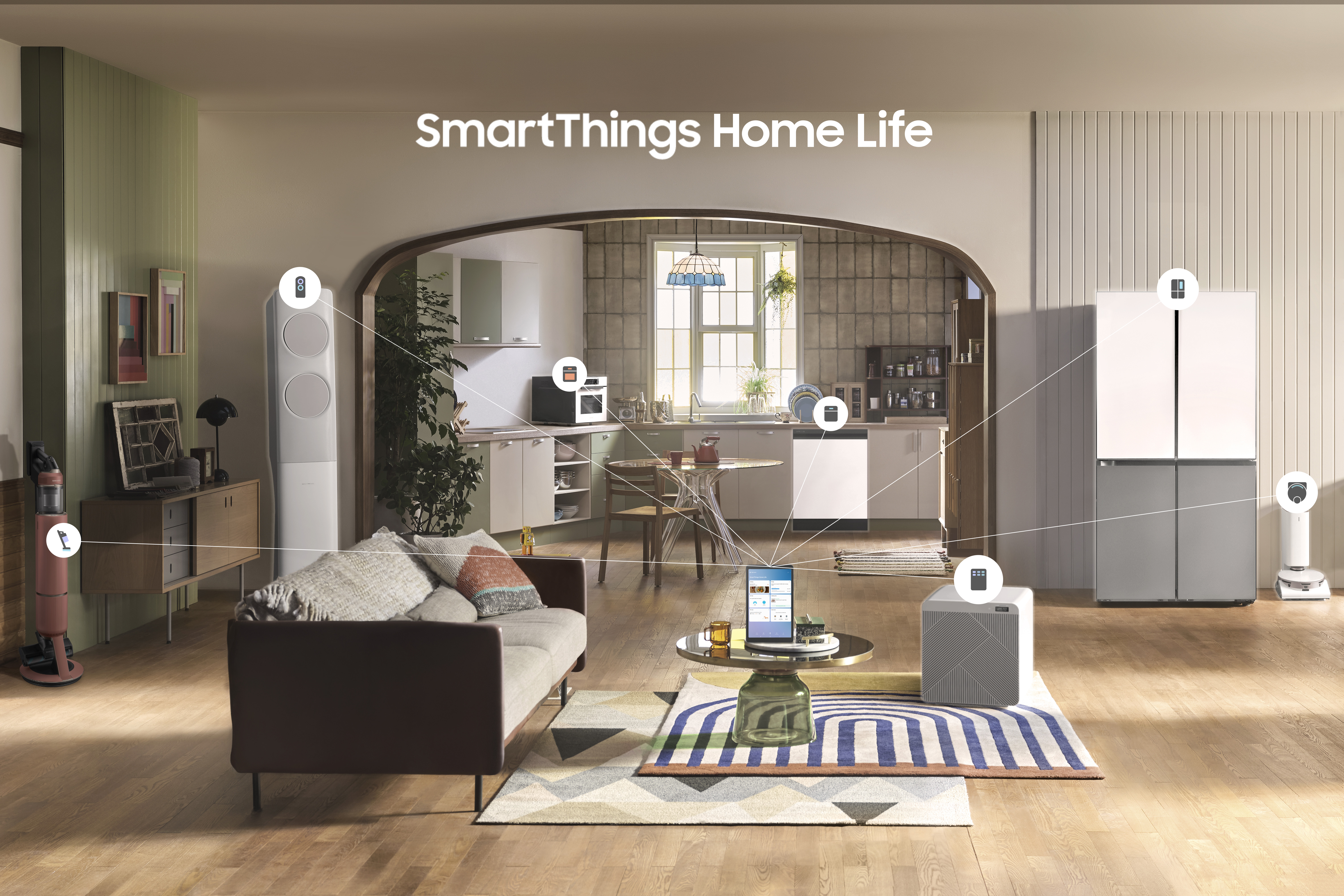
BALLIE is a compact mobile robot built around cameras, microphones, speakers, projection, and connection to SAMSUNG’s SMARTTHINGS ecosystem. SAMSUNG and Google Cloud announced that Gemini would support natural conversation and multimodal understanding. BALLIE can interpret what it sees and hears, move to where context exists, and coordinate devices around the home.
Its form is far from humanoid. Its significance for manufacturers is closely related.
Mobility changes the relationship between intelligence and products. A stationary assistant receives abstract commands. A mobile agent can inspect the state of a room, identify a device, observe a user, project information onto a surface, and act through connected controls. It begins to mediate how people discover and operate products.
Every object in that environment competes for machine understanding. Can the robot recognize the product and model? Can it determine whether the product is active, empty, blocked, open, hot, safe, or finished? Can it find authoritative instructions? Can it map a human request such as “get the room ready for a workout” to the product states required to fulfill it?
Brands have historically optimized visibility for shelves, search engines, and human attention. Embodied AI adds a new discovery layer. Product identity needs to survive varied lighting, angles, occlusion, and wear. Instructions need structured meaning. State needs to be legible through software or observable physical cues.
BALLIE also highlights the value of graceful delegation. A mobile robot with limited manipulation can control compatible devices digitally, guide a person visually, and monitor outcomes. A future robot with arms may add physical interaction. The same product knowledge can support both, provided it is organized around entities, capabilities, actions, constraints, and states.
This is why robot readiness reaches beyond adding an API. The product needs a coherent representation across the physical and digital world. The handle, button, app command, manual instruction, safety condition, and sensor feedback should describe the same action.
The smart home is becoming an active system that sees and reasons. Products need to become understandable within it.
Hero image: editorial photograph. Official brand imagery and required credits are available via the sources above.
Ainsof independently analyzes how advances in robotics affect products, tools, and physical environments. Company names and trademarks belong to their respective owners. References to third-party products do not imply endorsement or partnership.